
Why Every DMARC for Trucking Companies Is Vital in 2026
Freight fraud starts with a single deceptive email. Implementing robust DMARC for trucking companies is essential in 2026 to neutralize email spoofing, prevent cargo diversion scams, and protect core logistics communications.
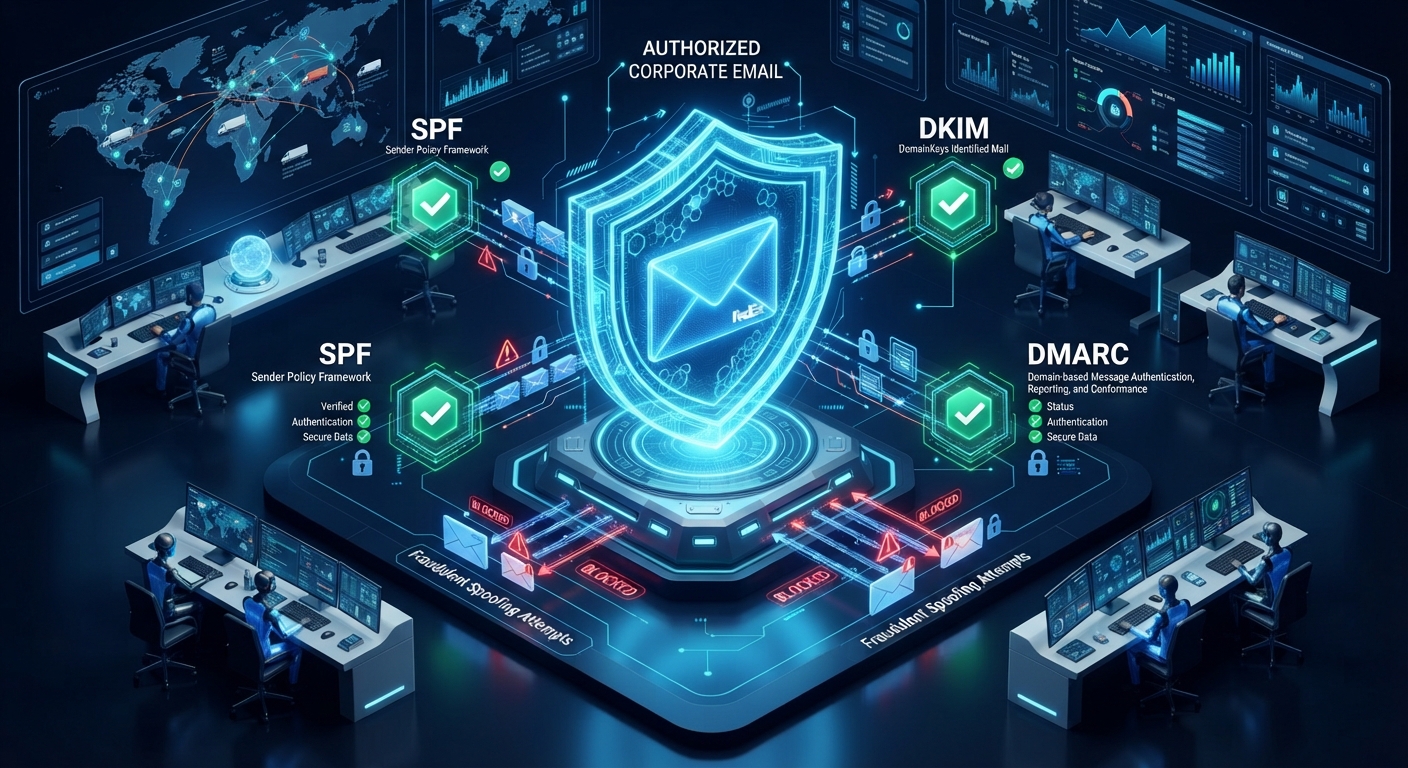
Email spoofing represents one of the most deceptive threats facing the freight and logistics industry. When cybercriminals forge domain headers to make fraudulent messages appear as though they originated directly from your dispatch team, establishing strict DMARC for trucking companies becomes non-negotiable.
Transportation networks rely heavily on swift, trusted email coordination between shippers, brokers, and motor carriers. According to cybersecurity advisories from the CISA Cybersecurity Best Practices Guide, unauthenticated domains allow malicious actors to launch widespread Business Email Compromise (BEC) and double brokering attacks with ease.
Deploying comprehensive email authentication safeguards your brand reputation, ensures deliverability to major enterprise partners, and establishes an unbreakable line of defense against modern digital fraud.
Demystifying SPF, DKIM, and DMARC for Trucking Companies
Achieving robust email defense requires a coordinated triad of protocol standards. Each layer serves a specific function in verifying the legitimacy of outbound messages before they reach recipient inbox servers.
Merely setting up SPF is no longer enough. Implementing DMARC for trucking companies with a strict `p=reject` policy ensures that any spoofed email impersonating your domain is instantly dropped before reaching a shipper or broker inbox.
Operational Benefits of Domain Authentication in Logistics
Beyond stopping cybercrime, configuring advanced email standards yields immediate operational advantages for freight carriers and 3PLs:
- Enhanced Inbox Deliverability: Major email providers (Google, Microsoft, Yahoo) routinely filter or block unauthenticated marketing and dispatch notices. DMARC ensures your load tenders reach clients reliably.
- Elimination of Domain Spoofing: Criminals moving down the line will bypass your protected domain, turning their focus elsewhere.
- Improved Cyber Insurance Standing: Underwriters increasingly evaluate domain security posture when approving or renewing cyber liability policies.
- Trust and Credibility: Shippers and brokers gain absolute confidence knowing your electronic paperwork is cryptographically verified.
Step-by-Step Implementation of DMARC for Trucking Companies
Rolling out email authentication across a logistics enterprise requires a methodical approach to avoid accidentally disrupting legitimate dispatch communications.
Phase 1: Audit and Inventory
Map out every software platform, cloud newsletter tool, CRM, and third-party TMS that sends emails using your domain name.
Phase 2: Configure SPF and DKIM Records
Publish accurate SPF DNS entries and enable DKIM signing keys across your primary email host (such as Google Workspace or Microsoft 365).
Phase 3: Deploy DMARC in Monitoring Mode (p=none)
Publish an initial DMARC record set to `p=none` with reporting addresses enabled. This collects data on all mail servers sending traffic under your domain without blocking legitimate messages.
Phase 4: Move to Quarantine and Reject Policies
Analyze incoming reports over several weeks to ensure all authorized services pass checks, then escalate the policy to `p=quarantine` and finally `p=reject`.
Protect Your Business Before Freight Fraud Happens
Cybercriminals continuously refine their tactics to exploit gaps in transportation communication channels. Integrating robust DMARC for trucking companies forms an impenetrable digital perimeter around your brand identity.
Compliance frameworks and federal agencies like the FMCSA Carrier Identity Guidelines consistently advocate for technical verification controls as the first line of defense against identity theft in logistics.
Secure Your Logistics Domain With Expert DMARC Implementation
Navigating DNS configurations, SPF record limits, and DMARC reporting can be complex for internal IT teams. Vector Shield Cybersecurity helps transportation providers implement complete email authentication frameworks to stop spoofing and freight fraud in its tracks.
Protect your dispatch communications, secure your carrier reputation, and ensure full compliance. Schedule a consultation with our cybersecurity specialists today.
Email Authentication & DMARC FAQs
Clear answers to the most common questions logistics providers ask about implementing DMARC for trucking companies.
DMARC (Domain-based Message Authentication, Reporting, and Conformance) is an email security protocol that builds upon SPF and DKIM. For trucking companies, it prevents cybercriminals from spoofing your domain name to send fraudulent rate confirmations, fake load tenders, or wire transfer changes to shippers and brokers.
Fraudsters forge the sender address on emails to look identical to a legitimate carrier or broker. They use these spoofed emails to trick accounting departments into redirecting factoring payments or to illegally double-broker high-value loads without detection.
If DMARC is enforced with a strict reject policy (`p=reject`) before configuring all legitimate third-party sending tools (such as payroll systems, TMS platforms, or marketing software), valid dispatch emails may be blocked by recipient servers. This is why a phased rollout starting with monitoring mode (`p=none`) is essential.
Yes. Leading inbox providers like Google and Microsoft enforce strict bulk sender and domain authentication guidelines. Domains lacking proper SPF, DKIM, and DMARC configurations face severe deliverability penalties or outright rejection.
Vector Shield Cybersecurity audits your current mail flow, configures optimized SPF and DKIM records, manages the DMARC reporting phase to identify all sending sources, and safely elevates your policy to strict rejection to lock out email spoofing and freight fraud permanently.