
Why Cyber Security Myths Matter
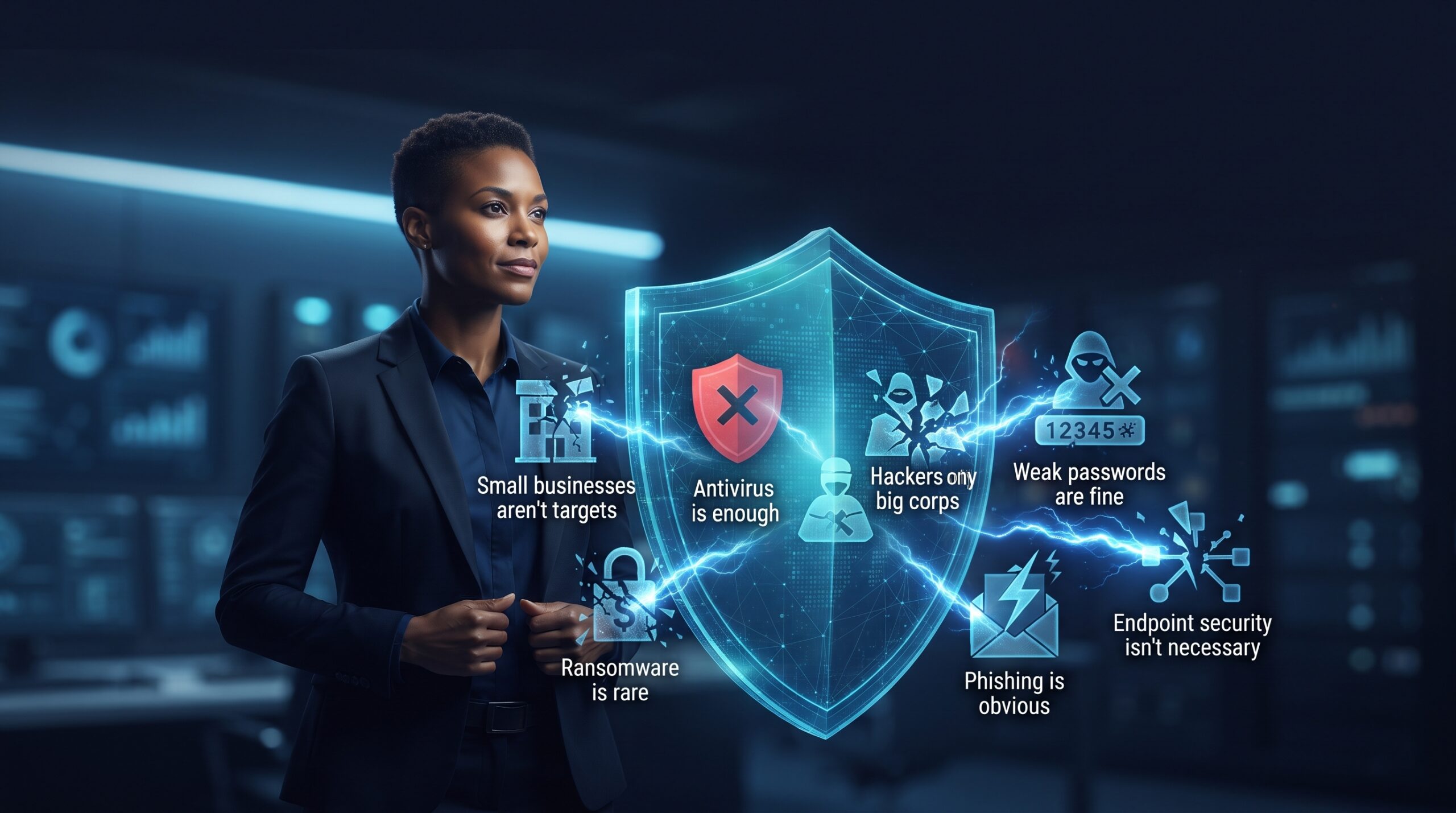
After years of helping small businesses and everyday users protect their devices, we’ve heard just about every cyber security myth there is. The problem is that believing these myths can leave you exposed to real attacks.
Whether you’re a retiree checking email, a professional working remotely, or a small business handling sensitive customer information, understanding the difference between cyber security myths and reality can make a major difference.
01 “I’m Too Small to Be a Target.”
Small businesses and individuals can also be attractive targets. Attackers don’t necessarily need you to be rich, famous, or a large corporation. They may simply look for systems, accounts, or devices that are easier to compromise.
One commonly cited industry statistic says that 43% of cyberattacks target small and mid-sized businesses. Regardless of the exact percentage, the broader lesson is important: being small does not automatically make you invisible.
Start with a basic security assessment to identify exposed accounts, outdated software, weak configurations, and other vulnerabilities before an attacker finds them.
02 “I Have Antivirus, So I’m Safe.”
Antivirus software is an important layer of protection, but antivirus alone may not address every modern threat. Attackers increasingly use techniques designed to avoid traditional signature-based detection.
Malware can disguise itself, operate without traditional files, exploit newly discovered vulnerabilities, or behave differently from previously identified threats.
- Monitors endpoint behavior in real time
- Helps identify suspicious activity
- Provides additional visibility beyond traditional antivirus
- Can help respond to potentially malicious behavior
Vector Shield provides EDR-focused protection designed to add another layer of visibility and defense for supported devices.
03 “I Don’t Keep Anything Important on My Computer.”
Your device may contain much more valuable information than you realize. Even when important files are not stored locally, your computer can provide access to other accounts and services.
- Saved browser passwords
- Email accounts and private communications
- Personal photos and documents
- Online banking and payment accounts
- Credit card or financial information
- Access that could potentially be abused to attack other systems
A compromised device or account can become a stepping stone for additional attacks. That’s why checking the security of your system matters even if you believe you have nothing valuable stored on it.
A security scan can help identify vulnerabilities, suspicious activity, outdated software, and other areas that deserve attention.
04 “Cyber Security Is Too Expensive.”
Security costs vary significantly depending on the number of devices, services, security requirements, and level of monitoring involved. Protection does not necessarily require a large IT department.
Vector Shield Starting Plans
- Individuals starting at $9.99/month
- Small businesses starting at $24.98/month
Actual pricing and available services can vary based on the protection required. Visit Vector Shield for the latest plan details.
A security incident can also create costs related to investigation, recovery, downtime, lost productivity, account recovery, and potential data exposure.
It is also worth considering what an unmanaged security incident could cost your business or personal life in time, disruption, and recovery effort.
Vector Shield is designed to provide professional security protection without requiring every small business to build a large internal IT department.
05 “I Don’t Need Protection, I’m Careful Online.”
Being careful is important, but caution alone cannot eliminate every cyber risk. Attackers can create messages, websites, invoices, and login pages that look convincing and legitimate.
Common Examples
- A legitimate-looking invoice requesting payment
- A fake Microsoft, Google, or banking login page
- An email appearing to come from a coworker
- A message designed to create urgency or fear
- A compromised account sending messages to people you already know
Sometimes all it takes is one convincing interaction for an attacker to obtain credentials or access to an account.
Vector Shield can also provide phishing simulation and security awareness testing to help identify areas where additional training may be useful.
Vector Shield: Busting Myths and Building Defense
Cybersecurity doesn’t have to be confusing. The goal is to build practical layers of protection that match the needs of your home or business.
- Real-time EDR for endpoint visibility and protection
- Ransomware prevention to help defend against destructive attacks
- Secure firewall configuration for stronger network protection
- U.S.-based support for security assistance
- Phishing simulations and training to improve security awareness
- Affordable protection plans for individuals and businesses
Final Thought
Cyber security myths can create a false sense of safety. You don’t have to be a large company, a wealthy individual, or someone with highly sensitive files to benefit from better security.
The most useful approach is to understand your actual risks, identify weak points, and put appropriate protections in place.
A simple cybersecurity assessment today can help you understand where you stand and what steps may make sense next.
Need Help Protecting Your Devices or Business?
Vector Shield Security can help you assess your current security posture, identify vulnerabilities, and build practical protection for your home or business.
Contact us today to learn more about cybersecurity protection, EDR, phishing awareness, and security assessments.
Frequently Asked Questions
What are common cyber security myths?
Common cyber security myths include believing that small businesses are not targeted, antivirus alone provides complete protection, there is nothing valuable on a personal computer, cybersecurity is always expensive, or careful online behavior completely eliminates hacking risk.
Are small businesses really targeted by cyberattacks?
Yes. Small businesses can be targeted because they may hold valuable data, accounts, payment information, and business systems. Company size does not automatically eliminate cybersecurity risk.
Is antivirus enough to protect my computer?
Antivirus is an important security layer, but it should not necessarily be treated as the only layer of protection. Endpoint monitoring and additional security controls can provide broader visibility and defense.
Why should I protect my computer if I have nothing important on it?
Your device may contain saved passwords, email access, personal information, photos, financial accounts, or other valuable access even if important files are not stored locally.
Can being careful online prevent cyberattacks?
Good online habits can reduce risk, but they cannot eliminate every threat. Attackers can create highly convincing phishing messages, fake login pages, malicious files, and compromised-account communications.