
How Freight Fraud Starts With a Single Email: 5 Critical Risks
Modern freight fraud no longer requires breaking into cargo yards. Sophisticated cybercriminals now exploit deceptive emails, look-alike domains, and compromised credentials to steal high-value shipments and orchestrate double brokering scams.
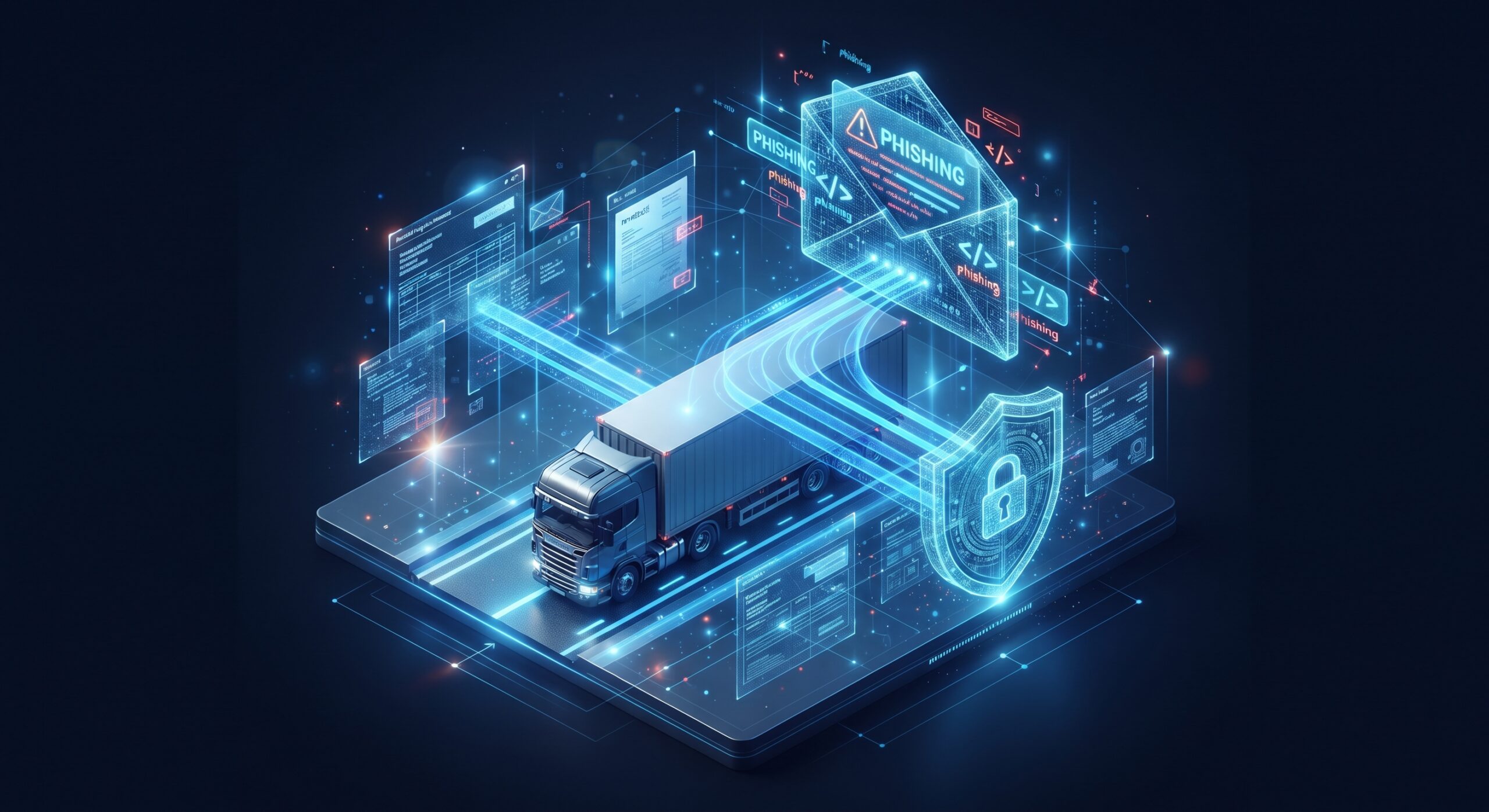
Freight fraud has transformed into one of the most financially damaging cyber-enabled crimes facing the transportation and logistics industry. What used to begin with physical cargo theft now starts behind a computer screen.
Freight operations are fast-paced, highly digitized, and depend on decentralized coordination between brokers, shippers, and carriers. According to recent advisories from the FMCSA Carrier Identity Guidelines, malicious actors weaponize business email compromise (BEC) to intercept shipments and manipulate payment routing numbers.
Logistics providers exchange hundreds of time-sensitive emails every day containing rate confirmations, load manifests, and driver schedules. This transactional volume creates the perfect cover for cybercriminals seeking to infiltrate communication chains.
How Freight Fraud Begins: The Initial Email Infiltration
A single phishing message sent to a dispatcher or freight coordinator is often all it takes to trigger widespread operational chaos. Attackers deploy typosquatted domains (e.g., substituting an "rn" for an "m" in a recognized carrier name) to deliver convincing communications.
Once an email account is compromised, the attacker monitors ongoing transactions silently:
In cyber-enabled freight fraud, legitimate dispatchers often have no idea their inbox has been breached. Attackers use automated inbox filters to mark real broker inquiries as read, quietly intercepting negotiations behind the scenes.
Common Freight Fraud Scenarios Targeting Trucking Companies
Cybercriminals combine digital deception with operational confusion to execute several damaging schemes across the supply chain:
1. Illegal Double Brokering Schemes
A bad actor impersonates a legitimate, vetted carrier using falsified credentials to secure a load from an authorized broker. The scammer immediately re-brokers that same load onto an open board at an inflated rate to an unsuspecting second carrier. The scammer collects the original broker fee and vanishes, leaving the secondary trucker unpaid and creating severe legal disputes.
2. Carrier Identity Theft & MC Spoofing
Scammers exploit publicly visible safety data on state and federal portals. By cloning a reputable company's branding, phone number, and USDOT profile, fraudsters book freight, take payment advances, and abandon the shipment before authorities intervene.
3. Payment Interception and Factoring Fraud
Right before payment settlement, attackers send urgent emails from compromised accounts claiming sudden changes in bank accounts or factoring arrangements. Without independent phone verification, accounting teams transfer hundreds of thousands of dollars to criminal accounts.
Warning Signs: Red Flags of Cyber-Enabled Freight Fraud
Identifying digital deception before assigning freight or executing payouts requires vigilant operational discipline. Logistics teams should watch for these warning signs:
- Free Email Provider Domains: Brokers or carriers communicating via generic addresses (e.g., @gmail.com or @yahoo.com) rather than corporate domains.
- Urgency & Aggressive Booking: Heavy pressure to release rate confirmations quickly without permitting standard background verification.
- Mismatched Contact Details: Phone numbers or email extensions that do not match the company snapshot listed in official registry databases.
- Last-Minute Bank Account Changes: Wire instructions that arrive shortly before payment processing citing bank system audits.
- Abnormally High Load Rates: Offers that exceed current lane market values to tempt carriers into skipping safety vetting.
The federal CISA Guidance on Business Email Compromise underscores that human validation remains the final safeguard when automated perimeter email filtering is bypassed.
Essential Security Controls to Prevent Freight Fraud
Protecting your logistics business requires technical cybersecurity defenses working in tandem with strict operational controls. Relying purely on antivirus or basic email spam filters leaves the door open to credential theft.
- Mandatory Phishing-Resistant MFA: Enforce multi-factor authentication across Google Workspace, Microsoft 365, and dispatch portals.
- Strict Out-of-Band Payment Verification: Never accept banking changes via email alone. Always verify adjustments using established phone numbers.
- Advanced Email Authentication: Implement strict SPF, DKIM, and DMARC enforcement to prevent criminals from spoofing your domain name.
- Continuous Endpoint Detection (EDR): Maintain 24/7 endpoint visibility on dispatcher workstations to identify stealth credential harvesters.
- Role-Based Security Awareness Training: Regularly educate coordinators on real-world supply chain phishing scenarios and fake load board alerts.
Protect Your Logistics Operations From Freight Fraud
A single compromised email account can cost your company valuable freight, key broker partnerships, and thousands of dollars in stolen payments. Vector Shield Cybersecurity specializes in securing logistics and transportation businesses from business email compromise, credential theft, and operational hijacking.
Schedule a comprehensive cybersecurity assessment today to identify gaps in your email defenses and fortify your dispatch infrastructure before attackers strike.
Freight Fraud & Email Security FAQs
Clear answers to the most common questions logistics providers face regarding cyber-enabled freight theft and email compromise.
Cyber-enabled freight fraud involves attackers using phishing emails, stolen credentials, or spoofed business domains to hijack communications between shippers, brokers, and carriers. This enables them to intercept payments, double-broker loads illegally, or redirect physical cargo to unauthorized locations without breaking into a yard.
A dispatcher clicking a deceptive link surrenders their email credentials to attackers. Fraudsters log in, set up silent forwarding rules, and monitor ongoing shipments. When a load reaches dispatch, they send forged instructions to carriers or factoring companies with fraudulent bank accounts, pocketing the freight payout.
Legal co-brokering involves transparent, written agreements between licensed brokers with the explicit consent of the shipper. Illegal double brokering occurs when an unauthorized middleman accepts a load under false pretenses and re-brokers it without consent, often pocketing the payment while leaving the actual carrier unpaid and the freight uninsured.
The most reliable control is mandatory out-of-band verification. Whenever a broker, vendor, or carrier requests changes to payment methods, wire instructions, or factoring details via email, staff must call an independently verified phone number on file to confirm the request before releasing funds.
Vector Shield Cybersecurity deploys complete defense-in-depth solutions tailored for transportation companies. We provide advanced email authentication (SPF, DKIM, DMARC), phishing-resistant multi-factor authentication, managed 24/7 EDR endpoint monitoring, and security awareness training to neutralize social engineering attacks before disruption occurs.