
Essential Insurance Agency Cybersecurity: 10 Critical Controls to Adopt Fast
Modern insurance agency cybersecurity is vital for protecting high-value policyholder data, banking credentials, and medical histories. Implementing robust security controls defends your firm against ransomware while maintaining full regulatory compliance.
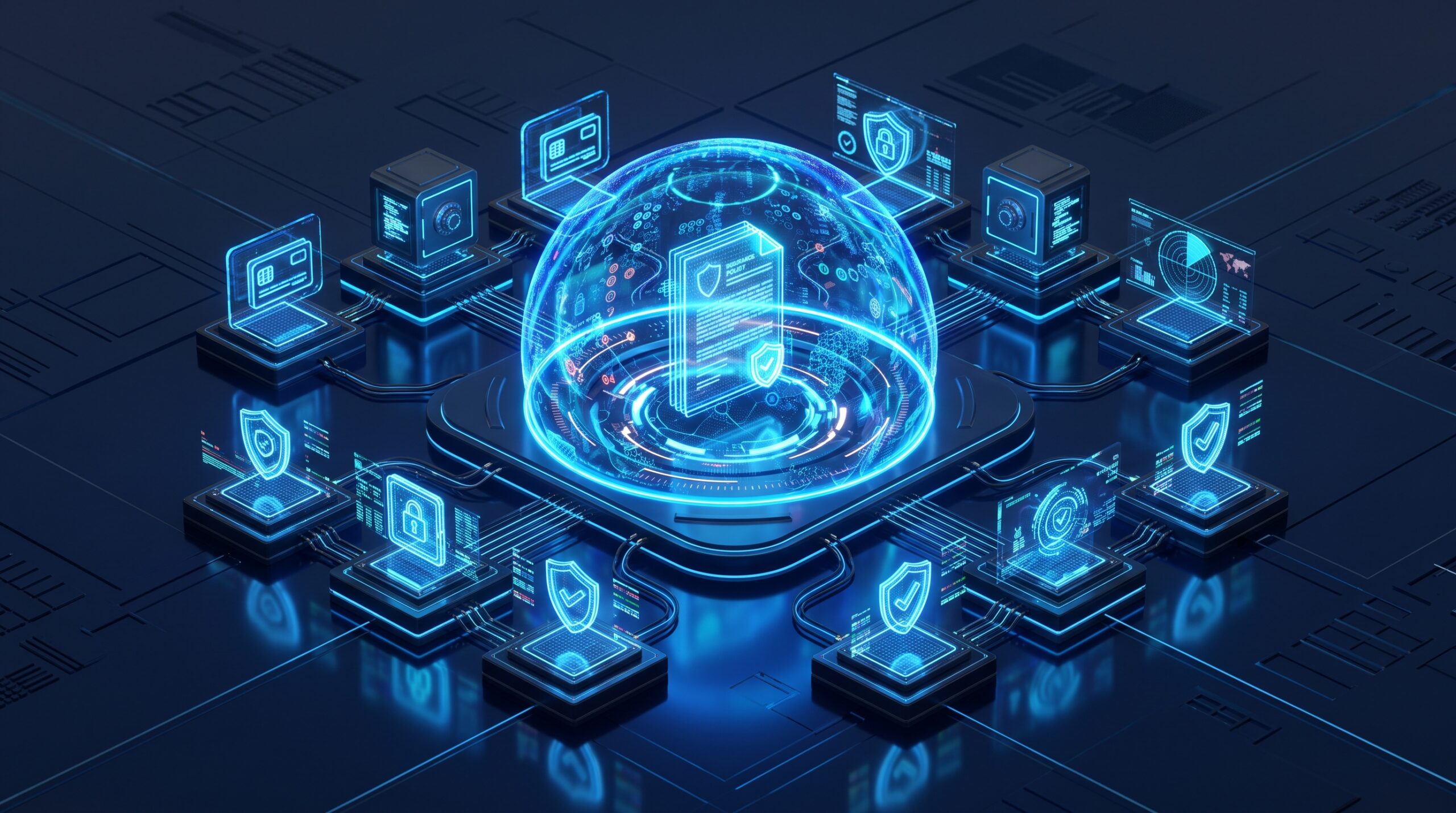
Prioritizing insurance agency cybersecurity has become a critical operational requirement for independent brokers and national firms alike. Agencies sit on an invaluable treasure trove of Personally Identifiable Information (PII), corporate tax records, driver licenses, and detailed financial profiles.
Unlike banks that deploy massive in-house defensive perimeters, small to mid-sized agencies are frequently viewed by cybercriminals as vulnerable entry gates into larger insurance carrier networks. The NAIC Cybersecurity Model Law emphasizes that insurance businesses must implement formal risk assessments and administrative safeguards to protect consumer data against exfiltration.
Meeting modern regulatory expectations and securing your own Errors & Omissions (E&O) and cyber liability policies requires executing a concrete defense-in-depth model across five foundational domains:
Access Control & Phishing-Resistant MFA
Stolen credentials represent the most common entry method used in agency breaches. Effective insurance agency cybersecurity begins with universal Multi-Factor Authentication (MFA) across your Agency Management System (e.g., Applied Epic, AMS360, HawkSoft), corporate email accounts, and remote access VPNs.
In addition to MFA, agencies must practice the Principle of Least Privilege (PoLP). Producers, customer service representatives, and billing staff should only access the specific client files necessary for their immediate roles, restricting blanket administrative rights.
Transition away from legacy SMS-based authentication codes toward hardware security keys or authenticator apps featuring number matching to stop adversary-in-the-middle phishing attacks.
Endpoint Detection & Response (EDR) with 24/7 Monitoring
Traditional signature-based antivirus solutions can no longer stop fileless malware, memory injection, or living-off-the-land techniques. A cornerstone of modern insurance agency cybersecurity is Endpoint Detection and Response (EDR) or Managed Detection and Response (MDR).
EDR software continually monitors endpoint telemetry across office workstations, laptops, and on-premise servers. Backed by a 24/7 Security Operations Center (SOC), suspicious process activity is flagged and isolated automatically, stopping lateral movement within minutes.
Immutable and Air-Gapped Data Backups
When ransomware gangs strike an agency, their primary target is not your production files—it is your backup repository. Satisfying baseline insurance agency cybersecurity expectations means implementing write-once, read-many (WORM) immutable backups.
Maintain the industry-standard 3-2-1 backup strategy: 3 copies of vital data on 2 different media types, with 1 copy stored securely off-site in an air-gapped or immutable cloud vault. Document and test restoration speeds quarterly to validate operational recovery time objectives.
Ongoing Employee Security Awareness Training
Over 80% of breaches start with social engineering. Insurance professionals process hundreds of external quote requests, certificates of insurance (COIs), and email attachments weekly, making them prime targets for deception.
Effective insurance agency cybersecurity requires continuous, interactive awareness programs rather than a single annual presentation. Conduct simulated phishing campaigns, reinforce verification workflows for wire transfers, and teach agents to spot forged carrier domain names.
The federal guidance from the FTC Safeguards and Business Guidance explicitly mandates ongoing workforce training to preserve the privacy of consumer nonpublic personal information.
Third-Party Vendor Risk Management
Agencies utilize a complex ecosystem of cloud comparative raters, client portals, e-signature platforms, and third-party IT providers. A vulnerability within any single vendor can directly compromise your internal network.
Establish formal vendor risk management procedures. Request annual SOC 2 Type II audit reports from critical software providers, mandate strict confidentiality agreements, and verify that third-party integrations utilize secure API tokens rather than shared administrative passwords.
Controls 6 Through 10: Fortifying Your Defensive Perimeter
A comprehensive insurance agency cybersecurity program integrates technical safeguards that eliminate blind spots across software, hardware, and mobile environments:
- 6. Email Security & Domain Authentication: Enforce SPF, DKIM, and DMARC records to prevent threat actors from spoofing your agency domain to defraud clients.
- 7. Comprehensive Encryption: Ensure AES 256-bit encryption is active on all data at rest (including laptops and backup drives) and in transit (TLS 1.3).
- 8. Centralized Patch Management: Automate operating system and third-party software updates to remediate critical zero-day vulnerabilities within 14 days.
- 9. Documented Incident Response Plan (IRP): Maintain clear playbooks detailing forensic escalation steps, legal obligations, and client notification protocols.
- 10. Mobile Device Management (MDM): Enforce containerization and remote wipe capabilities on smartphones and tablets accessing agency email.
State and Federal Insurance Compliance Expectations
Failing to uphold adequate insurance agency cybersecurity can result in severe statutory penalties, license revocation, and significant civil liability. Regulators have moved aggressively toward strict accountability:
Regulations such as NYDFS 23 NYCRR 500, the FTC Safeguards Rule, and state-level adoptions of the NAIC Insurance Data Security Model Law require agencies to maintain written cybersecurity policies, conduct periodic risk assessments, and report qualifying incidents within strict 72-hour deadlines.
When renewing your own E&O or commercial cyber insurance, carriers require verification of these exact 10 security controls. An agency unable to prove compliance faces soaring premiums or outright policy cancellation.
Protect Your Insurance Agency From Emerging Cyber Threats
Securing policyholder data and satisfying complex state compliance mandates does not have to overwhelm your operational staff. Vector Shield Cybersecurity delivers enterprise-grade protection tailored for independent agencies and regional brokerages.
From deploying managed EDR and immutable backups to conducting full regulatory gap assessments, our cybersecurity specialists ensure your agency remains resilient, compliant, and insurable.
Insurance Agency Cybersecurity FAQs
Clear answers to common questions regarding regulatory compliance, technical safeguards, and cyber insurance qualification for agencies.
Insurance agencies hold rich repositories of nonpublic personal information, including social security numbers, banking details, corporate payroll records, and medical files. Attackers know agencies cannot afford prolonged operational downtime or reputation loss, making them high-probability targets for double-extortion ransomware schemes.
Agencies are subject to multiple regulatory frameworks depending on location and lines of authority. Key regulations include the NAIC Insurance Data Security Model Law (adopted by dozens of states), New York's strict NYDFS 23 NYCRR 500, the revised FTC Safeguards Rule, and state-specific breach notification statutes.
No. Traditional antivirus relies on static file signatures of known malware, which cannot detect scriptless exploits, ransomware precursors, or credential theft. Modern insurance agency cybersecurity standards require Endpoint Detection and Response (EDR) supported by 24/7 behavioral monitoring and instant device isolation capabilities.
Immutable backups employ write-once-read-many (WORM) technology that prevents anyone—including attackers who compromise administrative credentials—from encrypting, overwriting, or deleting backup snapshots. This ensures that an agency can restore operations cleanly without paying an extortion fee.
Vector Shield Cybersecurity provides end-to-end security managed services designed specifically for insurance firms. We deploy phishing-resistant MFA, continuous 24/7 EDR/MDR monitoring, immutable cloud backup architectures, simulated employee training, and assist with meeting regulatory audits under NYDFS, NAIC, and FTC guidelines.